Startup Cybersecurity Risks
Managed IT services reduce downtime by proactively monitoring, maintaining, and securing IT infrastructure before problems disrupt business operations. Through 24/7 monitoring, automated updates, cybersecurity, cloud management, data backups, and rapid remote support, businesses can minimize outages, improve productivity, and ensure their technology scales reliably as they grow.
What Founders Need to Know About Startup Cybersecurity Risks
Rapid growth is an exciting stage for any startup. New customers, larger teams, and increased revenue create expansion opportunities. However, fast growth also brings serious technology challenges. As companies add employees, applications, and digital systems, they may face startup cybersecurity risks that were not present during early stages.
Many founders focus heavily on product development, sales, and hiring. However, cybersecurity must become a board-level priority. A single security incident can interrupt operations, expose sensitive customer information, and destroy hard-earned market trust.
Key Takeaways
- Rapid expansion opens unexpected technical gaps across your digital perimeter.
- Employee credentials, cloud storage, and vendor tools require instant-access governance.
- Security policies must scale directly alongside your headcount and operations.
- Managed cybersecurity services protect valuable IP without slowing down shipping velocity.
- Partnering with Sentant builds a secure, highly scalable technology base.
Why Does Rapid Growth Cause Startup Cybersecurity Risks?
Rapid startup growth increases security risks because companies add users, devices, SaaS tools, and cloud resources faster than they can secure them. When teams jump from five to fifty people overnight, temporary operational shortcuts create massive exposure vectors across your infrastructure.
The reality on the ground is simple: speed often trumps governance in early-stage environments. Founders rush to get product updates out the door. New hires need immediate access to files, production code, and administrative dashboards. Without automated access policies, you end up with chaotic permissions, orphaned accounts, and misplaced data.
Addressing startup cybersecurity risks requires integrating security directly into your operational scaling plan.
Operational Vulnerabilities During Scaling
- User Access Governance: Managing permissions, shared logins, and elevated admin rights manually.
- Data Exfiltration Exposure: Tracking sensitive customer records and proprietary code bases across apps.
- Cloud Infrastructure Drift: Fixing default tenant settings, open storage buckets, and weak SaaS integrations.
- Security Awareness Gaps: Educating employees who lack training on social engineering and remote work safety.
- Regulatory Compliance Barriers: Meeting strict SOC 2, HIPAA, or ISO 27001 requirements for enterprise buyers.
How Do Employee Access and Permission Issues Harm Growth?
Uncontrolled employee permissions allow unauthorized users, malicious actors, or compromise-prone accounts to view and exfiltrate confidential business data. As workforce headcounts expand, manual credential tracking breaks down, leaving critical administrative systems wide open to internal and external threats.
Here’s the part most vendors won't tell you: standard password spreadsheets and informal Slack access requests are ticking time bombs. Leaving a former employee’s account active for even twenty-four hours post-termination opens massive legal and operational vulnerabilities.
Steps for Securing System Access
- Enforce Multi-Factor Authentication (MFA): Require hardware security keys or authenticator apps across all corporate logins to eliminate single-password threats.
- Deploy Role-Based Access Controls (RBAC): Restrict system access strictly to job function requirements to enforce least-privilege principles.
- Automate Onboarding and Offboarding: Standardize account provisioning on day one and revoke all system tokens instantly upon employee departures.
- Conduct Regular Audits: Review privilege logs monthly to revoke unused admin rights and catch unauthorized permission escalation.
What Happens When Security Processes Fail to Scale?
Outdated security practices leave scaling startups vulnerable because simple informal safeguards cannot protect multi-department teams. Early habits like saving shared credentials in web browsers or skipping critical patch updates quickly snowball into operational catastrophic events as team sizes expand.
Structure protects momentum. As your team expands across offices or remote setups, informal agreements must be replaced by documented, enforced security blueprints.
Core Security Policies Every Founder Needs
- Access Protocols: Deploy centralized password managers and mandate zero-trust credentials.
- Data Governance: Standardize classification guidelines for handling PII, customer records, and source code.
- Incident Response Plans: Map out clear, step-by-step containment strategies for active network breaches.
- Device Usage Standards: Enforce endpoint encryption, remote-wipe capabilities, and automated software patching.
Are Your Cloud Settings Exposing Critical Data?
Misconfigured cloud environments expose sensitive corporate data to the public internet through open storage containers, weak access keys, and missing encryption. While cloud infrastructure accelerates deployment speeds, default vendor settings rarely provide strict security out of the box.
A single open Amazon S3 bucket or unencrypted database snapshot can lead to millions in regulatory fines and complete loss of customer confidence. Continuous monitoring and regular posture reviews are mandatory for growth-stage environments.
Why Are Phishing and Social Engineering So Effective?
Phishing attacks target human psychology rather than software vulnerabilities, tricking employees into revealing credentials or approving fraudulent payments. Fast-hiring startups are prime targets because new employees lack familiarity with standard internal communication norms.
Attackers actively scrape LinkedIn to target recent hires with fake executive emails, altered vendor invoices, or urgent security verification requests. Technology defenses help, but a trained workforce forms your active frontline defense.
Key Security Terms for Startup Leaders
- Multi-Factor Authentication (MFA): Verification requiring two or more credentials before granting system entry.
- Role-Based Access Control (RBAC): Restricting network access based on an individual employee’s explicit job duties.
- Phishing Simulation: Controlled, mock social engineering attacks used to train workers on identifying live threats.
- Zero-Trust Architecture: Security model operating under the strict assumption that every network request must be authenticated.
- SOC 2 Type II: A comprehensive audit framework evaluating an organization’s data security and privacy controls over time.
Real-World Security Guidance for Founders
"Most founders view cybersecurity as a tax that slows down product shipping. In reality, modern enterprise customers use security assessments as a buying decision filter. If you cannot provide a SOC 2 report or demonstrate clean access governance during sales calls, your growth stalls immediately. Build security directly into your engineering pipeline early to turn compliance into a deal-closing sales advantage."
What Happens When Compliance Challenges Block Enterprise Deals?
Failing to meet data privacy laws and enterprise compliance standards stops sales pipelines cold and exposes startups to massive financial penalties. Modern B2B buyers require proof of strict security controls before sharing data or closing enterprise contracts.
Handling customer PII, credit card details, or health records without clear compliance roadmaps introduces severe liability. Partnering with security specialists streamlines your audit journey across key frameworks like SOC 2, ISO 27001, HIPAA, and PCI-DSS.
Why Do Resource-Constrained Startups Need Managed Support?
Small startup teams lack dedicated security talent, forcing non-technical leaders to manage complex cyber defenses alongside daily operational duties. This leads to missed system patches, ignored risk alerts, and vulnerable infrastructure setups.
Building an internal 24/7 Security Operations Center (SOC) is financially unrealistic for early-stage companies. Managed IT and cybersecurity support delivers immediate access to enterprise-grade expertise, proactive threat monitoring, and strategic guidance without massive overhead costs.
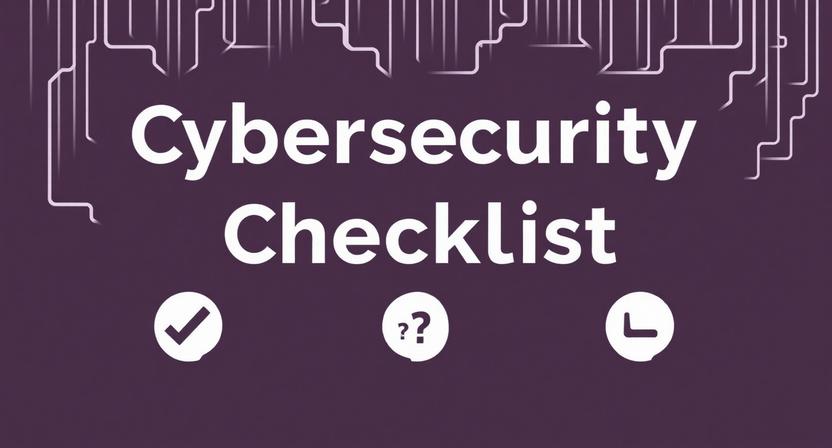
Practical Checklist to Mitigate Startup Cybersecurity Risks
Managing startup cybersecurity risks requires an actionable approach to tech hygiene. Follow this operational roadmap to secure your infrastructure while scaling:
- Assess Core Assets: Identify critical code repositories, customer databases, and sensitive financial storage points.
- Enforce Zero-Trust Authentication: Mandate MFA, set password length rules, and deploy single sign-on (SSO) tools.
- Automate Patching Operations: Force central updates across all laptop operating systems and cloud services.
- Implement Continuous Monitoring: Deploy endpoint detection and response (EDR) software to track suspicious behavior early.
- Run Regular Backups: Maintain encrypted, immutable cloud backups to recover fast from ransomware or data deletion incidents.
Building a Secure, Scalable Tech Base for Your Business
Protecting your startup requires balancing aggressive growth targets with proactive threat defense. By addressing system access issues, enforcing strong cloud hygiene, and training your workforce today, you protect customer trust and position your business for effortless enterprise expansion. Sentant delivers tailored IT management, cloud protection, and security support built specifically for fast-growing technology companies.
Ready to secure your rapid expansion? Partner with Sentant to eliminate startup cybersecurity risks and build an infrastructure designed for enterprise success. Call (310) 853-6084 or schedule your consultative security assessment today.
Frequently Asked Questions
Q: Why do cybersecurity risks increase during startup growth?
A: Cybersecurity risks increase during growth because adding employees, SaaS tools, and cloud resources creates wider attack surfaces and complex permissions. Fast scaling often outpaces existing security policies, leading to misconfigured cloud assets, unpatched software, and credential governance failures.
Q: What are the biggest cybersecurity threats for growing startups?
A: The primary cyber threats facing startups are phishing scams, cloud misconfigurations, stolen employee credentials, and missing compliance frameworks. Cybercriminals target fast-growing businesses knowing they often lack dedicated IT monitoring and centralized endpoint protections.
Q: How can startups effectively protect employee access?
A: Startups secure employee access by deploying Multi-Factor Authentication (MFA), Single Sign-On (SSO), and Role-Based Access Controls (RBAC). Automating identity management ensures new hires receive appropriate privileges while departing staff lose system access instantly.
Q: Should growing startups use managed cybersecurity services?
A: Yes, managed cybersecurity services provide access to enterprise security expertise and 24/7 system monitoring without the high cost of building an in-house team. Outsourcing IT security allows founders to focus on product development while keeping company assets protected.
Q: How often should startups review their cybersecurity strategy?
A: Startups should review their security strategy quarterly, as well as immediately following major funding rounds, workforce expansions, or software releases. Continuous risk assessments ensure your security posture scales cleanly alongside changing operational needs and regulatory compliance demands.
Will Pizzano, CISM is Founder of Sentant, a managed security and IT services provider that has helped dozens of companies achieve SOC 2 compliance. If you’re interested in help obtaining SOC 2 compliance, contact us.








.jpeg)