IT Support Strategies for Startups
Startups often lose valuable time and money when founders or employees handle IT issues themselves, especially as teams grow. Implementing scalable IT support—such as a centralized helpdesk, structured onboarding/offboarding, and essential cybersecurity tools like MFA and password managers—helps maintain productivity, security, and smooth operations. Many startups benefit from managed IT services, which provide proactive monitoring and predictable monthly costs instead of reactive, expensive “break-fix” repairs.

Scalable IT Support Strategies for Startups: A Founder’s Guide to Growth
It’s Monday morning in San Francisco, and the gears are already grinding to a halt. Your new marketing hire is sitting idle because their laptop isn’t provisioned. Your top salesperson is locked out of their inbox, and you—the founder—have wasted forty-five minutes on a password reset. If this sounds like your daily reality, you don’t just have a tech glitch; you have a scaling bottleneck that’s bleeding your runway dry.
As a leader, you track every dollar of burn, but you’re likely ignoring the "hidden tax" of DIY technical management. The reality is that minor, recurring annoyances scale just as fast as your headcount does. These lost hours don't just hit your bottom line; they kill team morale and momentum. In an ecosystem as competitive as the Bay Area, ignoring IT support strategies for startups is a gamble you can't afford to take.
Key Takeaways
- The DIY Trap: Managing your own IT once you hit 10 employees is a net-negative ROI activity for any founder.
- Security is Binary: You are either protected with MFA and password managers, or you are a sitting duck for social engineering.
- Productivity First: Day-one readiness for new hires is the difference between a high-performance culture and a disorganized one.
- Predictable Spend: Managed services replace "emergency" repair bills with a flat, scalable monthly fee.
Why Is a Helpdesk Essential for Early-Stage Teams?
A helpdesk acts as the single point of truth for all technical friction, preventing minor bugs from becoming company-wide outages. By routing every password reset, printer error, and software glitch through one dedicated channel, you remove the burden from your "tech-savvy" employees. Sentant ensures that your leadership team stays focused on product-market fit rather than troubleshooting hardware.
- Risk Mitigation: Stops "shadow IT" where employees download unvetted apps that leak company data.
- Technical Execution: Standardizes how tickets are tracked, prioritized, and solved.
- ROI: Frees up roughly 5–10 hours per week of founder time previously spent on tech "firefighting."
How Do You Master IT Onboarding and Offboarding?
Seamless onboarding requires a documented, repeatable checklist that integrates hardware provisioning, software licensing, and access permissions before the employee starts. For a San Francisco startup, this means ensuring a laptop is shipped, encrypted, and loaded with the right Slack, Jira, or GitHub credentials. Sentant automates these IT support strategies for startups so your new hires are billing hours by 9:00 AM on Day 1.
The Strategic Onboarding Framework
- Hardware Provisioning: Procure, asset-tag, and ship encrypted devices to the user's location.
- Identity Management: Provision Single Sign-On (SSO) accounts to ensure centralized access control.
- MDM Enrollment: Deploy Mobile Device Management (MDM) software to allow for remote wipes if a device is stolen in transit.
- Secure Offboarding: Instant revocation of all credentials the second an employee departs to prevent data exfiltration.
What Are the Cybersecurity Basics You Can’t Ignore?
Foundational security starts with three non-negotiables: a robust password manager, Multi-Factor Authentication (MFA), and a corporate VPN for remote access. Startups are often targeted because they lack these "deadbolt" defenses. In 2024, the Change Healthcare breach proved that even one missed MFA endpoint can lead to a billion-dollar disaster.
Expert Perspective: The "Too Small to Target" Fallacy
The Grit: Most hackers aren't "targeting" you specifically; they are running automated scripts looking for unlocked doors. If you don't use a password manager, your team is likely reusing the same three passwords across every SaaS tool you own. One leak at a third-party site effectively hands over the keys to your entire company. Use a tool like 1Password or LastPass—no exceptions.
Managed Services vs. Break-Fix: Which Model Wins?
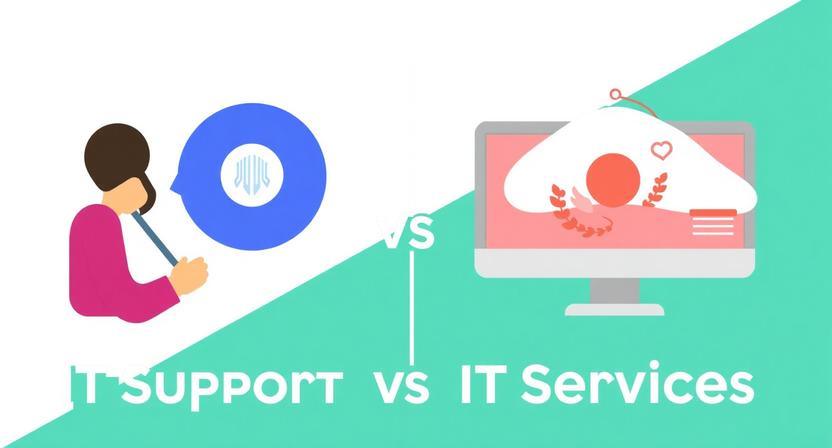
The Managed Services model provides proactive, 24/7 oversight for a flat fee, whereas the Break-Fix model is a reactive, hourly-billed approach that rewards the provider for your downtime. For a growing San Francisco startup, waiting for something to break before calling for help results in unpredictable costs and massive productivity loss.
What Does Managed IT Support Actually Include?
Comprehensive managed support includes proactive network monitoring, automated data backups, and high-level vendor management. We don't just fix laptops; we manage your relationship with your ISP and cloud providers. If the internet goes down in your SOMA office, we will spend the hour on hold with the provider so you don't have to.
High-Density Technical Requirements
- Proactive Monitoring: 24/7 digital "smoke detectors" that alert us to server failures or low disk space.
- Disaster Recovery: Automated off-site backups that act as an "undo" button for ransomware or accidental deletions.
- Vendor Advocacy: We speak the technical language to your software and hardware vendors to resolve disputes.
- Compliance Alignment: Ensuring your setup meets SOC2 or HIPAA standards as you scale toward enterprise deals.
How Much Should a San Francisco Startup Budget for IT?
A realistic budget for full-scale IT support ranges from $75 to $200 per user, per month, depending on the complexity of your security and compliance needs. While this may seem like an added expense, the cost of a single data breach or three days of team-wide downtime far exceeds the annual cost of a managed plan.
Mastering the Future of Your Infrastructure
Navigating IT support strategies for startups isn't about buying the most expensive gear; it's about building a foundation that doesn't crumble when you double your headcount. By moving from reactive firefighting to a proactive managed model, you turn your technology from a friction point into a silent competitive advantage.
Sentant specializes in taking the tech burden off the shoulders of San Francisco's most promising founders. We provide the "boots on the ground" expertise required to secure your data and streamline your operations, allowing you to focus entirely on your product.
Call (415) 805-2405 to schedule your free IT audit today.
Frequently Asked Questions
How do I know if my startup needs a Managed Service Provider?
If you have more than 10 employees and the founder or a "techy" developer is still the one resetting passwords and ordering laptops, you are ready for an MSP. The time saved usually pays for the service within the first month.
Is outsourced IT more secure than doing it in-house?
Yes, because an MSP uses professional-grade security tools (EDR, MDM, SOC monitoring) that are often too expensive or complex for a small startup to manage effectively on their own.
Can you help with SOC2 or HIPAA compliance?
Absolutely. We implement the technical controls—like encryption, access logs, and formal offboarding—that auditors require to grant these certifications.
What happens if an employee loses a company laptop?
With our MDM solutions in place, we can remotely lock the device and wipe all sensitive company data the moment it's reported missing, protecting your intellectual property.
What is the "Break-Fix" model's biggest flaw?
The biggest flaw is the misalignment of incentives. In a break-fix model, the IT person only makes money when your business is failing. In a Managed Services model, we make the most profit when your tech works perfectly, aligning our goals with yours.
Will Pizzano, CISM is Founder of Sentant, a managed security and IT services provider that has helped dozens of companies achieve SOC 2 compliance. If you’re interested in help obtaining SOC 2 compliance, contact us.






.jpeg)