Cybersecurity Checklist for Startups
A cybersecurity checklist for startups is essential because it helps protect sensitive data, intellectual property, and business operations from costly cyber threats while building trust with investors and customers. By implementing security controls early, startups can reduce compliance risks, strengthen their security posture, and avoid expensive disruptions that could slow growth or derail funding opportunities. Ultimately, strong cybersecurity is not just an IT function—it is a critical business strategy that supports long-term scalability and enterprise readiness.
Why Is a Cybersecurity Checklist for Startups Vital for Early-Stage Survival?
Building a fast-growth business in the San Francisco Bay Area requires raw speed, but scaling blind to digital threats leaves your entire capital raise exposed. A single data breach can trigger devastating financial losses, erase hard-earned investor confidence, and permanently sink an early-stage venture before it achieves market fit. Implementing a structured cybersecurity checklist for startups isn't an administrative roadblock—it is a foundational business strategy designed to lock down enterprise value and prove to enterprise buyers that your infrastructure is secure.
Effective startup cybersecurity practices help founders protect sensitive information, strengthen investor confidence, and reduce operational risks as their companies grow.
Key Takeaways
- De-Risk the Capital Stack: Institutional investors demand proof of security posture before closing Series A rounds.
- Stop Intellectual Property Drain: Early-stage codebases and trade secrets are primary targets for foreign corporate espionage.
- Bypass Legal Liabilities: Regulatory frameworks carry heavy statutory fines that can quickly dry up your remaining runway.
- Maintain Platform Trust: Enterprise buyers will abandon your SaaS pipeline instantly if you cannot validate data privacy protections.
What Is a Cybersecurity Checklist for Startups?
A cybersecurity checklist for startups is a structured framework that helps early-stage companies protect sensitive data, secure cloud infrastructure, reduce compliance risks, and prepare for investor and enterprise security reviews. It typically includes access controls, encryption, employee training, vulnerability management, and incident response planning.
Why Investors Review Startup Security Programs
Investors increasingly evaluate cybersecurity before funding growing technology companies. A documented cybersecurity checklist for startups demonstrates risk management maturity, protects intellectual property, and helps founders move through technical due diligence more efficiently. Strong security controls can also reduce compliance risks and support future enterprise sales opportunities.
What Should a Cybersecurity Checklist for Startups Include?
A comprehensive cybersecurity checklist for startups should include:
- Multi-factor authentication (MFA)
- Access control policies
- Employee security awareness training
- Cloud security best practices
- Data encryption
- Incident response planning
- Vendor risk management
- Regular cybersecurity audits
- Backup and disaster recovery procedures
- Compliance readiness reviews
Why Is Security a Critical Business Foundation for Rising
Tech Startups?
A structured cybersecurity checklist for startups bridges the gap between high-speed software development and rigid enterprise procurement protocols. By baking defense mechanisms into your infrastructure from day one, your team avoids the devastating friction of retrofitting code, refactoring databases, and rewriting internal access controls down the line.
- Defending Proprietary Codebases and Core IP: Strong data security for startups protects source code, customer information, intellectual property, and confidential business records from unauthorized access.
- Preserving Investor Confidence and Customer Pipelines: Trust is the hardest asset to earn and the easiest to burn in a highly competitive market. A public-facing data breach ruins your brand reputation overnight, driving prospects into the arms of legacy competitors. Many enterprise buyers require evidence of SOC 2 compliance before sharing sensitive data or entering long-term business agreements.
- Navigating Regulatory Compliance Pipelines early: Modern software industries require immediate compliance with severe global mandates. Failing to meet these rules halts operational growth and triggers massive statutory fines. Strong startup compliance processes help organizations meet legal obligations while preparing for enterprise vendor reviews and security assessments.
- Ensuring Uninterrupted Software Platform Continuity: Advanced digital attacks aim to take down your live cloud architecture. Reliable protection keeps your production environment stable, protecting monthly recurring revenue.
Why San Francisco Startups Need Strong Cybersecurity Early
The San Francisco Bay Area remains one of the most competitive startup ecosystems in the world. Investors, enterprise buyers, and strategic partners increasingly evaluate a company's security posture before signing contracts or funding rounds. As a result, cybersecurity is no longer just an IT concern. It has become a core business requirement.
Startups that implement a cybersecurity checklist for startups early often move through technical due diligence more efficiently. They also reduce operational risks, strengthen customer trust, and demonstrate a commitment to protecting sensitive information. In addition, strong security practices help growing companies prepare for compliance requirements and enterprise procurement reviews as they scale.
What Are the Real Financial Dangers of Neglecting Infrastructure Security?
Skipping security investment to preserve seed capital is a structural failure that creates catastrophic hidden liabilities. The true cost of a compromise stretches far beyond immediate technical cleanup, often dragging emerging companies into protracted legal battles and existential revenue death spirals.
A regular cybersecurity risk assessment helps identify vulnerabilities before they become costly security incidents. It also allows startups to prioritize remediation efforts based on potential business impact.
- Severe Security Breaches: Defenseless cloud servers invite exploit scripts that expose sensitive production data.
- Compounding Financial Red Ink: Recovering from an incident requires expensive forensic squads, defense attorneys, and steep regulatory fines.
- Permanent Reputational Destruction: The market punishes insecure platforms. Buyers drop compromised software providers immediately.
- Complete Operational Hard Stops: Ransomware freezes your code deployments and internal workflows. This can completely break a small team running on tight milestones.
- Exfiltration of Intellectual Property: Corporate threat actors regularly target vulnerable cloud architecture to copy patent-pending codebases.
How Do You Implement an Effective Security Best Practice Blueprint?
Securing your operational perimeter requires a continuous, tactical commitment across your entire technical stack and human workflow. Use this technical checklist to construct an ironclad defensive posture across your cloud footprint.
- Enforce Mandatory Cryptographic Authentication: Eliminate weak, reused employee entry points across all corporate accounts. Force the deployment of hardware-based multi-factor authentication (MFA) and enterprise password vaults.
- Automate Continuous Software Patching Routines: Vulnerabilities in third-party packages are an easy way in for hackers. Build automated patch tracking directly into your deployment workflows.
- Run Practical Employee Threat Simulation Labs: Human error is still the top vector for business email compromise. Run regular phishing tests so your team spots social engineering tricks before clicking.
- Harden Cloud Networking Infrastructure: Stop exposing open ports directly to the public internet. Isolate corporate workflows behind secure VPN gateways and modern encryption protocols. Following established cloud security best practices helps startups secure workloads, reduce exposure to threats, and maintain reliable operations across cloud environments.
- Enforce End-to-End Cryptographic Protocols: Cleartext data is an open invitation for corporate espionage. Encrypt data moving across networks and resting in your production buckets.
- Deploy Least-Privilege Identity Management: Never give junior engineers or external vendors root-level access to production environments. Limit access privileges strictly based on current job duties.
- Maintain Air-Gapped Immutable Backups: Ransomware regularly targets live database snapshots to force payout leverage. Keep encrypted, isolated backups off-site and test them often.
- Audit Third-Party Vendor Risk Profiles: Effective vendor risk management reduces exposure to supply chain threats and helps maintain a stronger overall security posture.
- Draft a Functional Incident Response Playbook: Figuring out what to do during an active security incident leads to panic and mistakes. Write down clear, step-by-step containment protocols so everyone knows their role.
- Codify a Formal Security Strategy Document: Investors want to see written evidence of risk management policies. Build a living document that maps out your security goals, risk tolerances, and defensive controls. A formal information security program provides documented policies, governance controls, and risk management procedures that support long-term business growth.
- Cultivate a Security-First Operational Engineering Culture: Security shouldn't feel like an afterthought pushed by management. Make safe data handling a core value, from onboarding to daily standups.
- Deploy Continuous Cloud Intrusion Detection Systems: Real-time monitoring catches anomalies before they blow up. Use active monitoring tools to watch network traffic and flag weird behavior.
- Validate Disaster Recovery Restore Performance: Backups are useless if your restoration scripts fail during an outage. Run scheduled fire drills to prove your team can stand up servers under tight deadlines.
- Protect Endpoint Storage Drives via Full Disk Encryption: Lost laptops shouldn't turn into corporate data breaches. Force full disk encryption across every employee's machine used for work.
- Standardize Formal Vendor Security Questionnaires: Protect your infrastructure by building compliance demands into vendor contracts. Force partners to match your security baseline before onboarding them.
- Execute Comprehensive Internal Configuration Audits: Small cloud misconfigurations can leave databases exposed to public scanning tools. Run regular internal reviews to spot drifts from safe baselines. A periodic cybersecurity audit helps verify that security controls remain effective and aligned with evolving business requirements.
- Align System Engineering to Standard Compliance: Adopting a recognized cybersecurity framework helps startups build security controls that align with industry standards, regulatory requirements, and customer expectations.
- Secure Physical Hardware Workspace Access Points: Digital defense doesn't matter if an intruder can walk up to an unlocked machine. Use keycard locks and strict camera coverage to protect your physical spaces.
- Run Monthly Access Review Sweeps: Leftover accounts from former employees are a massive security blind spot. Review and wipe out unneeded access permissions every single month.
- Schedule Professional Offense-Based Penetration Tests: Automated scanners can't catch everything. Hire external ethical hackers to challenge your code and expose hidden flaws.
Key Technical Security Definitions
- Advanced Multi-Factor Authentication (MFA): A security protocol requiring multiple independent validation factors to verify an identity during login.
- AES-256 Data Encryption: A military-grade symmetric block cipher used to secure sensitive digital information from unauthorized viewing.
- Zero-Trust Network Architecture: An IT security framework centered on the belief that organizations shouldn't automatically trust anything inside or outside their perimeters.
- Offense-Based Penetration Testing: A controlled, simulated cyberattack run by external security specialists to find exploitable weaknesses in software architectures.
Expert Insight from the San Francisco Startup Ecosystem
The reality on the ground in the San Francisco startup ecosystem is that enterprise buyers do not care how innovative your technology is if your platform introduces third-party security vulnerabilities into their corporate networks. We regularly see promising SaaS pipelines completely freeze because a founder cannot answer a basic 200-item vendor compliance assessment. Locking down your security posture early is what separates businesses that scale from teams that get crushed during technical due diligence.
Ready to Validate Your Technical Infrastructure and Close More Enterprise Deals?
The ground reality in the San Francisco market is that manual spreadsheets cannot keep pace with shifting compliance requirements. Our security specialists provide the tailored engineering support and automated tracking you need to survive tough vendor reviews and secure major contracts. Let us handle the complexities of institutional security compliance so your engineering team can stay focused on building outstanding software.
- Review your current software architecture by scheduling a comprehensive Cybersecurity Framework Analysis.
- Spot hidden vulnerabilities in your production databases with a targeted vulnerability scan.
- Accelerate your roadmap toward institutional certifications like SOC 2 or ISO 27001.
Why Choose Sentant?
- Experienced cybersecurity consultants
- SOC 2 readiness support
- Vulnerability assessments
- Compliance gap analysis
- Security program development
- Startup-focused security guidance
Call Sentant at (415) 805-2405 to speak directly with an expert security engineer today.
Frequently Asked Questions
Q: How long does it take an early-stage company to secure a formal SOC 2 Type 1 attestation?
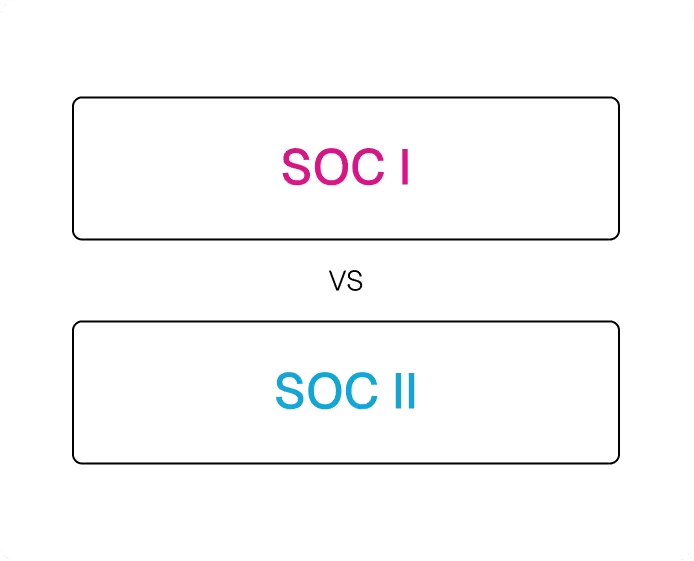
A: An early-stage software venture can typically secure a finished SOC 2 Type 1 report within two to four weeks once code controls are active. The Type 1 audit reviews the specific design of your security controls at a single point in time. This makes it an ideal, fast-tracked option for teams needing to satisfy immediate enterprise deal requirements.
Q: Why should a seed-funded SaaS business implement multi-factor authentication across all systems?
A: Mandating multi-factor authentication shuts down over ninety-nine percent of automated account takeover attempts targeting your corporate accounts. Relying on basic passwords leaves your business wide open to credential stuffing attacks, whereas cryptographic MFA stops attackers even if they manage to compromise your login credentials.
Q: What is the core structural difference between an automated vulnerability scan and a human penetration test?
A: Automated scans use software scripts to flag known unpatched flaws, while penetration tests involve human experts actively trying to break your system. Scans are great for quick, high-level checks, but a real penetration test uncovers complex business logic flaws and multi-step exploits that automated tools miss entirely.
Q: How often should engineering teams review internal database access privileges?
A: Engineering leadership should conduct thorough access reviews every single month to keep their permission footprints locked down tight. Regularly sweeping your access lists catches stale permissions from past projects and ensures offboarded contractors are completely wiped from your codebase.
Q: Will achieving global data compliance standards help an emerging platform close enterprise sales faster?
A: Yes, having verified compliance certifications dramatically shortens your sales cycle by bypassing long, messy vendor security questionnaires. Showing prospects a clean compliance report builds instant trust and satisfies corporate legal requirements, helping you close enterprise deals with much less friction.
Will Pizzano, CISM is Founder of Sentant, a managed security and IT services provider that has helped dozens of companies achieve SOC 2 compliance. If you’re interested in help obtaining SOC 2 compliance, contact us.




.jpeg)